
Thread rolling vs lap splice: which rebar connection is better?
Quick answer: for large-diameter rebar and heavy structural work, a thread-rolled mechanical connection is stronger and uses less steel; a lap splice is cheaper on equipment but wastes bar length. Our HGS-40 thread rolling machine handles Ø14–40 mm rebar.
Thread rolling: the HGS-40 cuts threads onto the bar ends so two bars join through a coupler. The joint is full-strength, needs no overlap length, and suits columns and beams where laps are congested or prohibited. It threads at 60–80 rpm with a 5.5 kW motor.
Lap splice: the traditional overlap needs extra bar length (typically 30–40 times the diameter) and is simpler — no couplers, no threading step — but it consumes more steel and is weak in tension-critical members. For small diameters it remains the economical default.
See the HGS-40 thread rolling machine, or tell us your rebar diameter and connection spec on WhatsApp.
Machines in these answers
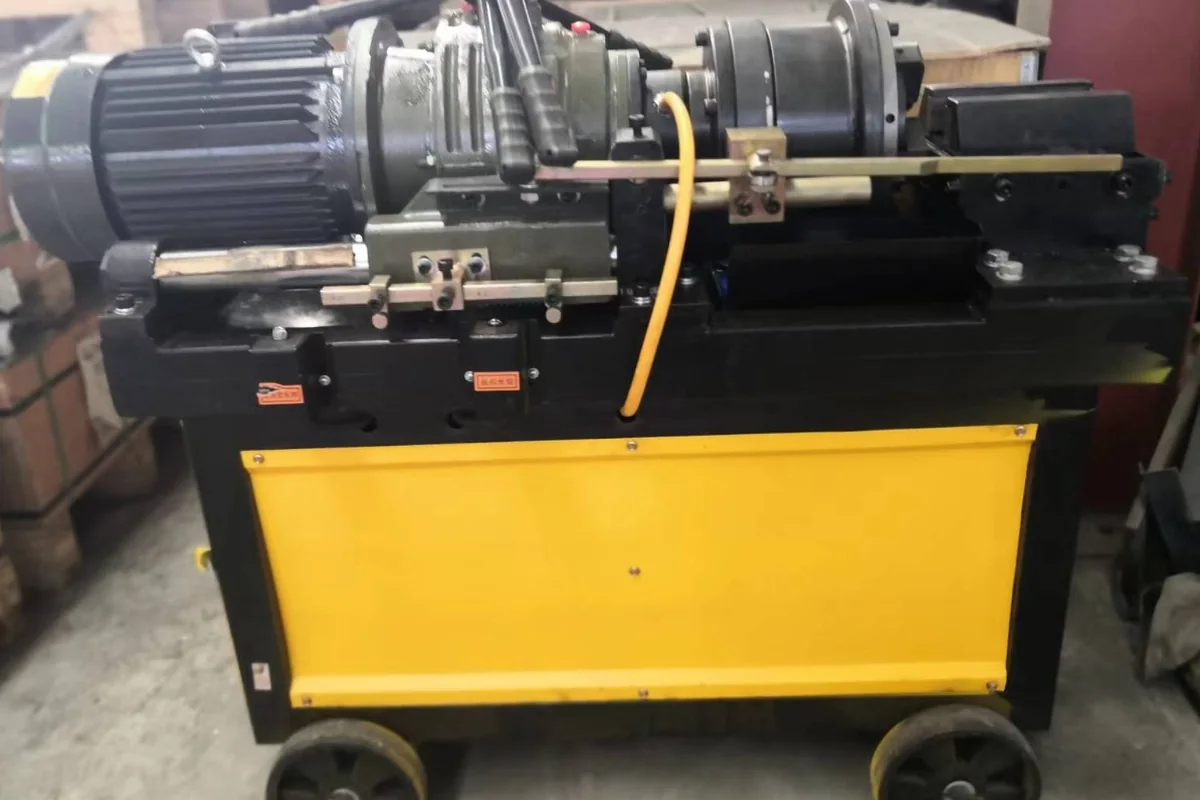
Rebar Thread Rolling Machine
Rebar thread rolling machine for thread-rolling 14-40 mm bars for mechanical splices.
| Processing range | Ø 14- Ø 40 mm |
|---|---|
| Main motor power | 5.5KW |
| Spindle speed | 60-80 rpm |
| Max thread rolling length | 90mm |
| Power supply | 380V 50HZ |