
Rebar Thread Rolling: How It Works and When to Use It
How Rebar Thread Rolling Works
Rebar thread rolling is a cold-forming process that creates precise threads on the end of a reinforcing bar. Unlike cutting or chasing threads, which remove material, thread rolling displaces the steel under high pressure using hardened dies. This cold extrusion compresses the grain structure of the steel, resulting in threads that are stronger and more fatigue-resistant than cut threads. The process is clean, fast, and produces no chips or waste.
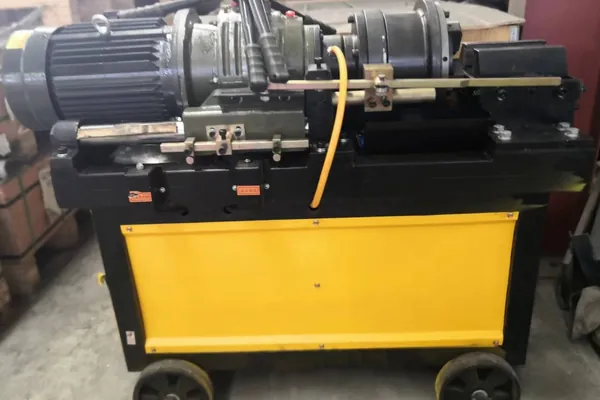
For example, the Gongda HGS-40 Rebar Thread Rolling Machine is designed to thread bars from 14 mm to 40 mm in diameter. It uses a pair of rotating dies that progressively form the thread profile as the bar is fed through the machine. The operator simply positions the bar, clamps it, and activates the cycle; the machine handles the rolling automatically, ensuring consistent thread quality every time.
When to Use Thread Rolling vs. Welding
Thread rolling is the preferred method for creating mechanical splices in rebar where welding is not allowed, impractical, or unsafe. Common situations include:
- Seismic zones where welded connections may crack under cyclic loading.
- Projects with strict fire safety codes that prohibit hot work on site.
- High-strength rebar (e.g., Grade 500 or higher) that is difficult to weld without losing strength.
- Prefabrication plants where speed and repeatability are essential.
Mechanical splices made with a rebar threading machine are also faster to install than welding, require less skilled labor, and can be inspected visually. They are widely accepted in international standards (e.g., ACI 318, EN 1992) for structural connections.
Key Considerations for Your Project
When deciding between thread rolling and welding, consider the bar diameter, grade, and the structural design requirements. For bars in the 14–40 mm range, a dedicated rebar thread rolling machine like the HGS-40 is a compact, low-maintenance solution. It is ideal for workshops that produce coupler splices for columns, beams, and foundation connections.
Also think about your production volume and labor costs. Thread rolling eliminates the need for certified welders and reduces rework. The machine pays for itself quickly in projects with many splice points. For a detailed assessment of your specific needs, our team can provide guidance based on your rebar sizes and expected daily output.
To get a tailored recommendation and a quote for the HGS-40 or other Gongda rebar processing equipment, contact us via WhatsApp at +86-138-0000-0000 or email export@gongda.com. We serve clients worldwide from Hefei, Anhui, China.
Related search terms
Phrases buyers in this market search for to find the exact machine.
Products
More rebar machine buyer guides
How Does a Rebar Bending Machine Work?
Read guide →Rebar Cutting Machine for 40 mm Bar
Read guide →Heavy-Duty Rebar Bending Machine for Big Bars
Read guide →Hydraulic Rebar Shearing Line: Working Principle and Output
Read guide →Stirrup Production Efficiency: What Machine Output Really Means
Read guide →Rebar Machines for Precast Concrete Plants
Read guide →All rebar machine buyer guides →
View all 30 guidesRebar Thread Rolling: How It Works and When to Use It — buyer questions
What is the MOQ for Rebar Thread Rolling: How It Works and When to Use It?
Usually 1 unit ??these are machines, not consumer goods. We can quote a single unit or a full line.
What is the lead time?
Standard machines ship in 7-15 days; custom or production lines take 20-35 days.
Do you provide certification and documents?
Yes ??CE and ISO documentation where applicable, plus commercial invoice, packing list and CO for customs.
How do I get a price?
Send the model and your country on the request-quote form or WhatsApp; we reply with FOB/CIF pricing and shipping options.