
CNC Stirrup Machine Cost and ROI Calculation
CNC Stirrup Machine Cost and ROI Calculation: What Buyers Should Actually Model
When a fabrication shop or rebar distributor evaluates a CNC stirrup machine, the purchase price is only the first number that matters. The real decision rests on three figures: how much labor the machine removes, how many tons of stirrups it can produce per shift, and how many months of savings are required to recover the investment. This article walks through a practical ROI model using real Gongda models — the GW25 single-head stirrup bender, the ZD-6M-25 and ZD-6M-20 five-head machines, and the GJZD6-50CZ CNC bending center — so buyers can plug in their own numbers.
Step 1: Establish Your Current Manual Cost Per Ton
Manual stirrup production typically requires three to five workers per bending station: one measuring and marking, one feeding, one bending, and one stacking. For a shop producing 8–12 tons of stirrups per day, that is often 6–10 workers tied up on bending alone.
Calculate your baseline:
- Workers on stirrup bending: e.g. 8
- Fully loaded monthly cost per worker (wage, insurance, overtime, meals): e.g. USD 700–1,200 depending on region
- Monthly labor cost: 8 × USD 900 = USD 7,200
- Monthly output: e.g. 200 tons
- Labor cost per ton: USD 36/ton
Add scrap and rework. Manual bending of small stirrups commonly runs 2–4% waste; CNC bending with programmed angles typically holds under 1%. On 200 tons at a USD 600/ton rebar price, cutting waste from 3% to 0.8% saves roughly USD 2,640 per month on its own.
Step 2: Match the Machine to Your Stirrup Mix
Different stirrup geometries justify different machines. Choosing the wrong class is the most common ROI mistake.
- GW25 CNC single-head stirrup bender: round steel up to 25 mm. Best for shops with high variety, low-to-medium volume, and frequent changeovers. One operator can run it; programming a new shape takes minutes.
- ZD-6M-25 / ZD-6M-20 five-head stirrup machines: 25 mm and 20 mm capacity. These are volume machines. Five bending heads work simultaneously, so output per shift is dramatically higher for standard closed stirrups and hoops. Ideal for projects with repetitive stirrup schedules — high-rise columns, beams, piles.
- GJZD6-50CZ CNC bending center: up to 50 mm with a 420 mm working table. This handles large-diameter and long-leg bends that stirrup benders cannot, and replaces heavy manual handling on big bars. The GJZD6-65CZ extends capacity to 65 mm.
- GDLWZX-32 vertical bending center (32 mm) and GDPMW-60 plane bending center (60 mm): for shops producing large formed bars, not just stirrups.
A realistic configuration for a 200-ton/month stirrup shop is one ZD-6M-25 for high-volume standard hoops plus one GW25 for custom and short-run work. That combination typically replaces 6–8 manual bending workers.
Step 3: Calculate Payback Period
Use this formula:
Payback (months) = Machine investment ÷ Monthly savings
Illustrative case — a shop replacing 7 workers with one ZD-6M-25 and one GW25:
- Monthly labor saved: 7 × USD 900 = USD 6,300
- Monthly scrap reduction (200 tons, 2.2% less waste at USD 600/ton): USD 2,640
- Additional output capacity (higher throughput allows more orders without adding shifts): variable, often USD 1,000–3,000 in contribution
- Total monthly benefit: roughly USD 9,000–12,000
If the two-machine package lands at USD 45,000–70,000 depending on configuration and freight, payback falls in the 5–8 month range. Even a conservative model that counts only labor savings — ignoring scrap and capacity — returns the investment in under a year.
For a single GW25 replacing 2–3 workers, expect payback in 8–14 months. For a five-head ZD-6M-25 running two shifts on repetitive hoops, payback can compress to 4–6 months because output per operator is highest.
Step 4: Costs Buyers Often Forget
- Tooling and bending pins: consumable, but low cost relative to labor savings.
- Power: CNC stirrup benders typically draw 5.5–11 kW; five-head machines higher. Factor local electricity rates.
- Training: programming is the main learning curve. Gongda machines use teach-in or numeric input; most operators are productive within days.
- Spares and service access: confirm availability of bending pins, hydraulic components, and control parts before purchase.
- Certification and compliance: for Russia and EAC markets, EAC certification is available on Gongda equipment — build this into the landed-cost calculation rather than treating it as an afterthought.
Step 5: Practical Buying Advice
Ask the supplier for a time study on your stirrup drawings, not a brochure figure. Provide 10–20 representative shapes with bar diameters and quantities per project. A credible manufacturer will return cycle times per shape and a shift output estimate. Compare that against your current labor cost per ton — the gap is your ROI.
Also verify capacity margins. A machine rated at 25 mm running 25 mm bar at maximum speed every day will wear faster than one running 16–20 mm. If your mix is heavy on large diameters, step up to the GJZD6-50CZ or GDLWZX-32 rather than overworking a stirrup bender.
Get a Calculation for Your Shop
Gongda (China Rebar Machinery), based in Hefei, Anhui, builds rebar processing equipment from a factory rooted in the electromechanical works of Hefei University of Technology. The range covers CNC bending centers, stirrup benders, arc benders, hydraulic shearing lines, cutting machines, straightening and cutting machines, band saws, thread rolling machines, spring making machines, and CO2 MIG welders — exported to Russia, Spain, Latin America, the Middle East, Southeast Asia, and Africa.
Send your stirrup schedule and current labor cost per ton for a model-specific payback estimate:
- WhatsApp: +86 193 9277 7259
- Email: yuhua0095@gmail.com
Send your requirement on WhatsApp — we reply within one business day.
WhatsApp Request a Quote →Products
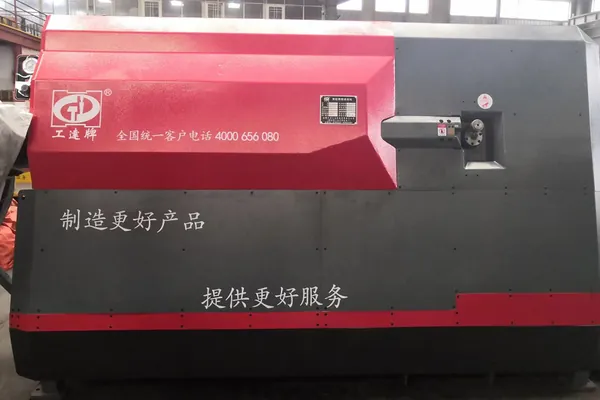
CNC Rebar Forming Machine
CNC rebar forming machine for high-speed forming of stirrups and shaped bars, single and double line operation.
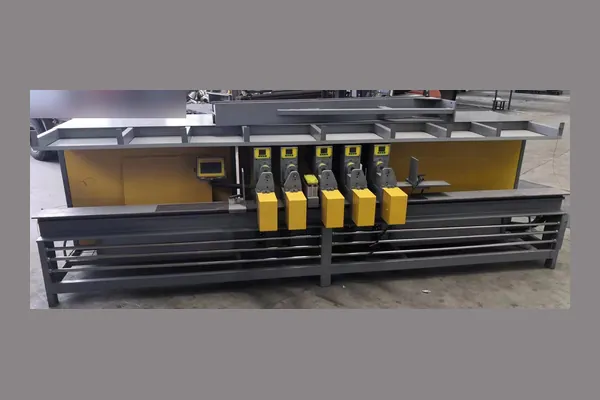
CNC Straightening-Cutting-Stirrup Line
Complete CNC straightening-cutting-stirrup production line combining VFD straightening, hydraulic cutting and five-head stirrup bending.
CNC Five-Head Stirrup Bending Machine
CNC five-head stirrup bending machine producing multiple stirrups per cycle with pneumatic automatic locking.
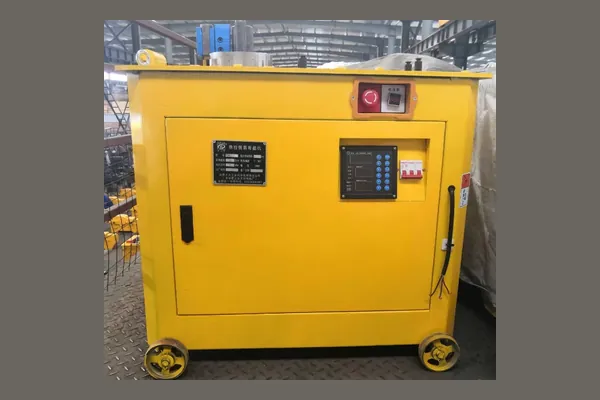
CNC Rebar Stirrup Bending Machine
CNC rebar stirrup bending machine for round steel up to 25 mm, quick and precise stirrup production.
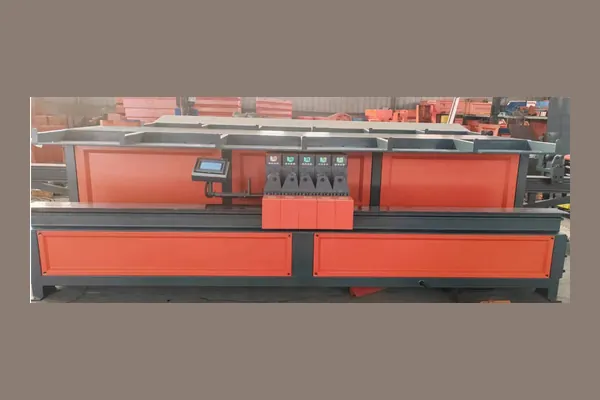
CNC Five-Head Stirrup Bending Machine
CNC five-head stirrup bending machine with hydraulic automatic locking and 8 kW installed power.
More Articles
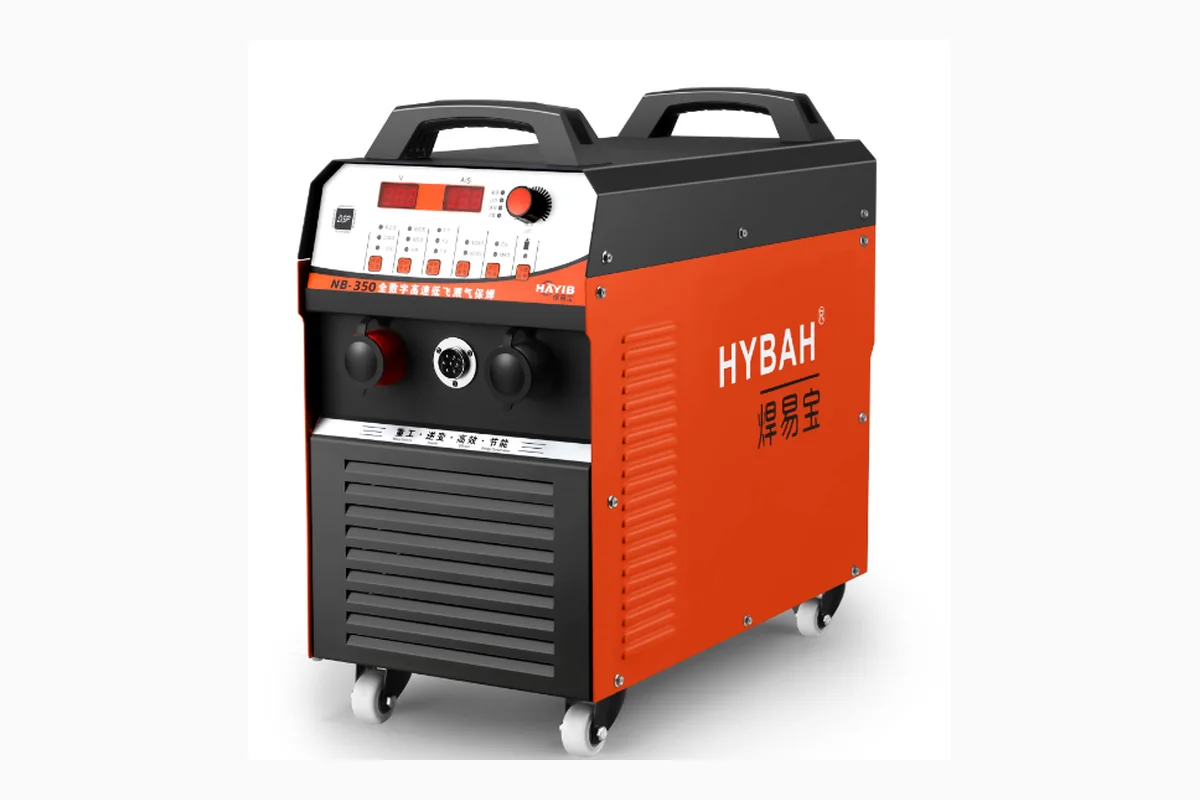
Single-Line vs Double-Line Rebar Machines: Which to Choose
Single-Line vs Double-Line Rebar Machines: Which to Choose If you are specifying a CNC rebar forming machine f…
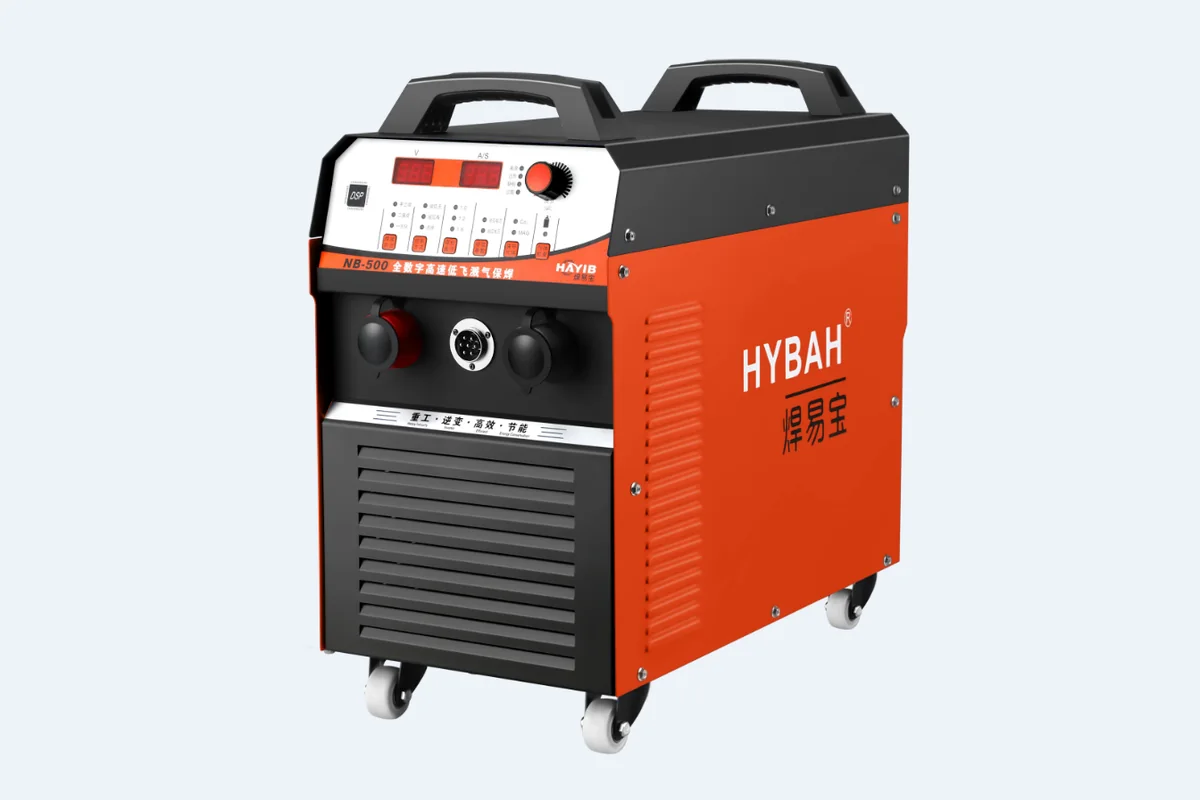
Rebar Machine Electricity Requirements (380V, 50/60Hz)
Rebar Machine Electricity Requirements: 380V, 50/60Hz, and Generator Sizing for Remote Sites Most buyers sourc…
How to Calculate Rebar Processing Productivity
How to Calculate Rebar Processing Productivity: Bends Per Hour, Stirrups Per Shift, and Line Throughput Most b…
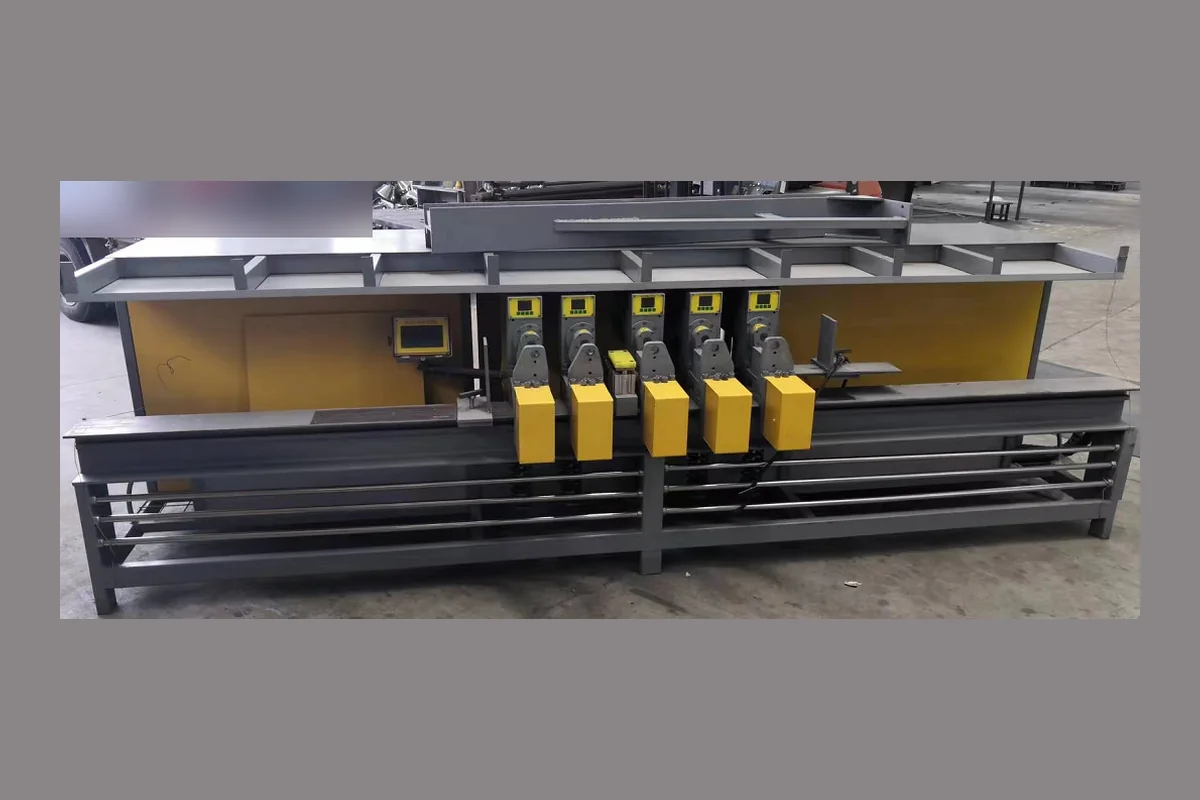
Rebar Machine Safety Operation Rules
Rebar Machine Safety Operation Rules: A Practical Guide for Buyers and Operators Rebar processing equipment is…
Rebar Machine Maintenance Checklist
Rebar Machine Maintenance Checklist: Daily, Weekly and Monthly Schedules That Prevent Downtime Every hour a CN…
Rebar Cutting Machine Price Guide 2026
Rebar Cutting Machine Price Guide 2026: GQ50A vs GQ70A vs Hydraulic Shear Lines If you are budgeting for rebar…
Ready to Talk Numbers?
Send us your rebar processing requirements and get a factory-direct quotation within one business day.