
Hydraulic Rebar Shearing Line: When You Need GDQX-500
Hydraulic Rebar Shearing Line: When You Need GDQX-500
If your fabrication shop is still squaring up bundles of rebar on a single-head cutter, the bottleneck is rarely the operator — it is the process. A hydraulic rebar shearing production line such as the GDQX-500 from Gongda (China Rebar Machinery) is built for one job: turning high-volume cutting lists into stacked, accurate cut bars with minimal handling. This article explains where a shearing line beats a manual cutter, what throughput to realistically expect, and how to match the machine to your bar mix.
What the GDQX-500 actually is
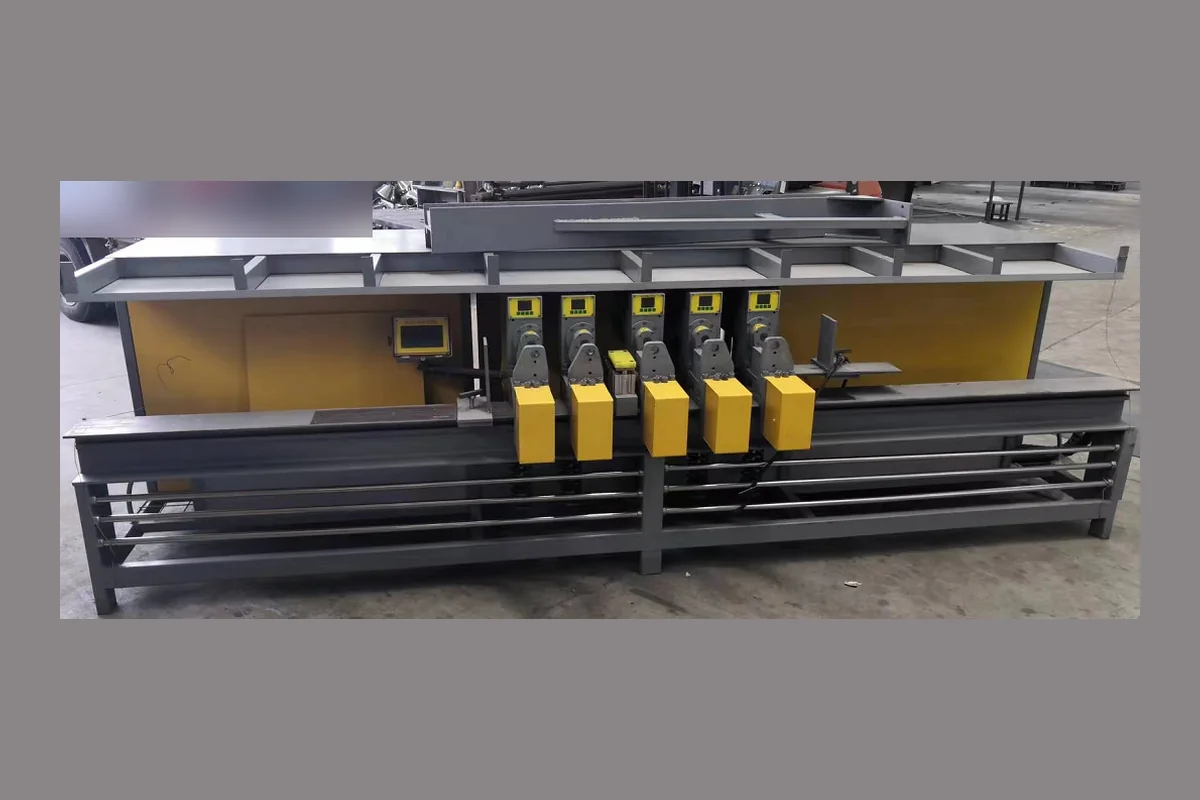
The GDQX-500 is a hydraulic rebar shearing production line, not a bench cutter with a bigger blade. Bars are fed along a conveyor, positioned against a measuring stop, and sheared by a hydraulic head in a single stroke. Because feeding, measuring and cutting are continuous, one operator can run the line while the shear does the heavy work. It is designed for mass cutting of both ribbed (deformed) and round bars, which matters because many projects mix the two — spiral cages, dowels, anchor bolts and plain round stirrup stock often share the same cutting schedule.
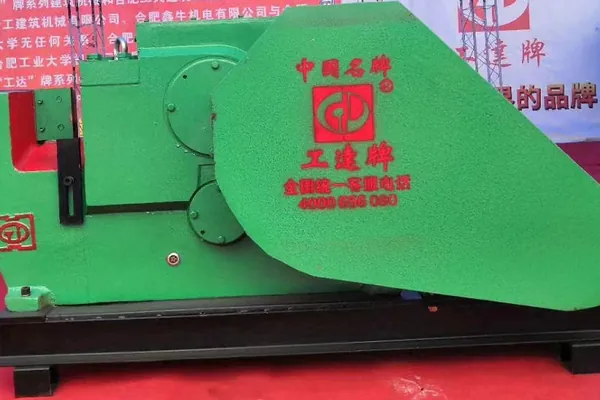
Typical GDQX-500 configurations handle bar diameters in the common construction range, with the hydraulic head delivering the shear force needed for full bundles rather than single bars. For reference, Gongda's standalone hydraulic cutter, the GQ70A, produces 160 tons of shear force and cuts up to 70mm; the GDQX-500 line applies the same hydraulic principle in a production format. If your cutting list is dominated by 12–32mm ribbed bar, the line will run comfortably; if you routinely cut 40mm-plus, confirm the shear head rating with the factory before ordering.
Throughput: what "mass cutting" really means
Throughput on a shearing line is governed by three variables, not one:
- Bars per stroke. A hydraulic shear cuts a bundle in one cycle. Cutting six 16mm bars per stroke is roughly six times the output of cutting them one at a time, minus handling time.
- Stroke cycle time. Hydraulic shears cycle in seconds. The practical limit is usually how fast the operator can advance the bundle to the stop, not the shear itself.
- Measuring and stacking. A production line with a length stop and discharge table removes the tape-measure step that dominates manual cutting. This is where most of the labour saving comes from.
In practice, a shop moving from single-bar cutting to a GDQX-500 line typically reports the cutting station stops being the constraint on the shop floor. The honest way to size the machine is to take your weekly tonnage, divide by the number of bars per bundle you can feed, and compare that to the shear cycle time. If the answer shows the line idling, a smaller hydraulic cutter plus a straightening and cutting machine may be the better buy.
When a shearing line is the right call
- Repeat cutting lists. Hundreds of identical bars — pile cages, column ties, slab reinforcement — where setup time is amortised across long runs.
- Mixed ribbed and round stock. The line handles both, so you are not switching machines between bar types.
- Labour cost pressure. One operator on a line can out-produce two or three on manual cutters, and the cut length consistency is better.
- Downstream automation. If cut bars feed a bending centre, consistent bundle cutting keeps the bender supplied without a buffer of manual cutting.
When you should buy something else
A shearing line is the wrong purchase if your work is short runs, one-off lengths, or mostly small diameters. In those cases, look at the GQ50A cutting machine (6–50mm round, 6–36mm ribbed) for general cutting, or the YGT4-15A straightening and cutting machine with VFD for coil-fed 4–15mm work. Shops that need both cutting and forming often pair a GQ70A or GQ50A with a GJZD6-50CZ CNC bending centre (up to 50mm, 420mm working table) or the larger GJZD6-65CZ, rather than investing in a full shearing line.
Practical buying advice
- Confirm the shear rating against your largest bar. State your maximum diameter and grade (HRB400, HRB500) when enquiring — higher grades need more force.
- Plan the layout. A shearing line needs infeed and outfeed space. Measure your bay before committing.
- Ask about the measuring system. Mechanical stops are cheap and reliable; powered length setting speeds up changeovers on varied lists.
- Check certification for your market. Gongda can supply EAC certification, which matters for Russia and CIS buyers. The company exports to Russia, Spain, Latin America, the Middle East, Southeast Asia and Africa.
- Match the line to your bending equipment. If you run GW25 single-head stirrup benders, ZD-6M-25 or ZD-6M-20 five-head stirrup machines, or a GDWQ4-15A CNC rebar forming machine, the cut lengths from the shearing line should feed those machines directly.
Getting a straight answer on capacity
Gongda is based in Hefei, Anhui, with the factory rooted in the electromechanical works of Hefei University of Technology — useful background when you are assessing engineering support rather than just price. For a GDQX-500 quotation sized to your bar schedule, send your cutting list and maximum diameters via WhatsApp at +86 193 9277 7259 or email yuhua0095@gmail.com. Include your market so certification and voltage requirements are quoted correctly the first time.
Send your requirement on WhatsApp — we reply within one business day.
WhatsApp Request a Quote →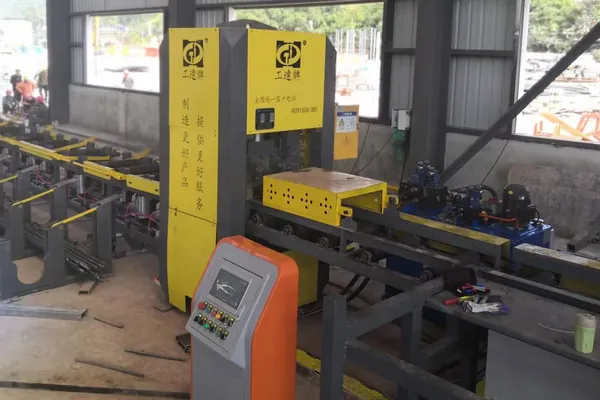
More Articles
Single-Line vs Double-Line Rebar Machines: Which to Choose
Single-Line vs Double-Line Rebar Machines: Which to Choose If you are specifying a CNC rebar forming machine f…
Rebar Machine Electricity Requirements (380V, 50/60Hz)
Rebar Machine Electricity Requirements: 380V, 50/60Hz, and Generator Sizing for Remote Sites Most buyers sourc…
How to Calculate Rebar Processing Productivity
How to Calculate Rebar Processing Productivity: Bends Per Hour, Stirrups Per Shift, and Line Throughput Most b…
Rebar Machine Safety Operation Rules
Rebar Machine Safety Operation Rules: A Practical Guide for Buyers and Operators Rebar processing equipment is…
Rebar Machine Maintenance Checklist
Rebar Machine Maintenance Checklist: Daily, Weekly and Monthly Schedules That Prevent Downtime Every hour a CN…
CNC Stirrup Machine Cost and ROI Calculation
CNC Stirrup Machine Cost and ROI Calculation: What Buyers Should Actually Model When a fabrication shop or reb…
Ready to Talk Numbers?
Send us your rebar processing requirements and get a factory-direct quotation within one business day.