
Rebar Cutting Machine Selection Guide (GQ50A vs GQ70A vs GDQX-500)
Rebar Cutting Machine Selection Guide: GQ50A vs GQ70A vs GDQX-500
Cutting is the first operation on almost every rebar job, and it is also where most production bottlenecks start. Buyers comparing machines quickly run into three Gongda models: the GQ50A, the GQ70A and the GDQX-500 hydraulic shearing line. They look similar on a specification sheet, but they solve different problems. This guide breaks down cutting range, shear force, and the single-cutter versus shear-line decision so you can match the machine to your actual bar schedule.
Cutting Range: What Each Machine Actually Handles
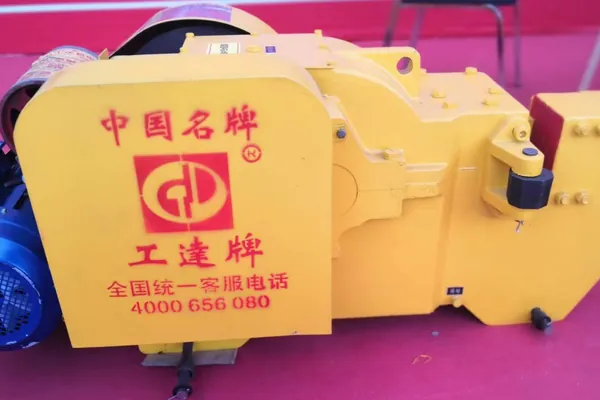
The GQ50A covers 6–50 mm round steel and 6–36 mm ribbed (deformed) bar. That asymmetry matters: ribbed bar is harder to shear because the deformations concentrate stress and the effective cross-section is larger, so the ribbed capacity is always lower than the round capacity on the same machine. If your drawings call for 40 mm HRB400, the GQ50A is not the right tool even though "50" appears in the model name.
The GQ70A extends the range to 70 mm, making it the choice for large-diameter columns, bridge pile cages, and heavy foundation work. It is a single-cutter machine like the GQ50A, but built with a heavier frame and blade assembly to absorb the higher load.
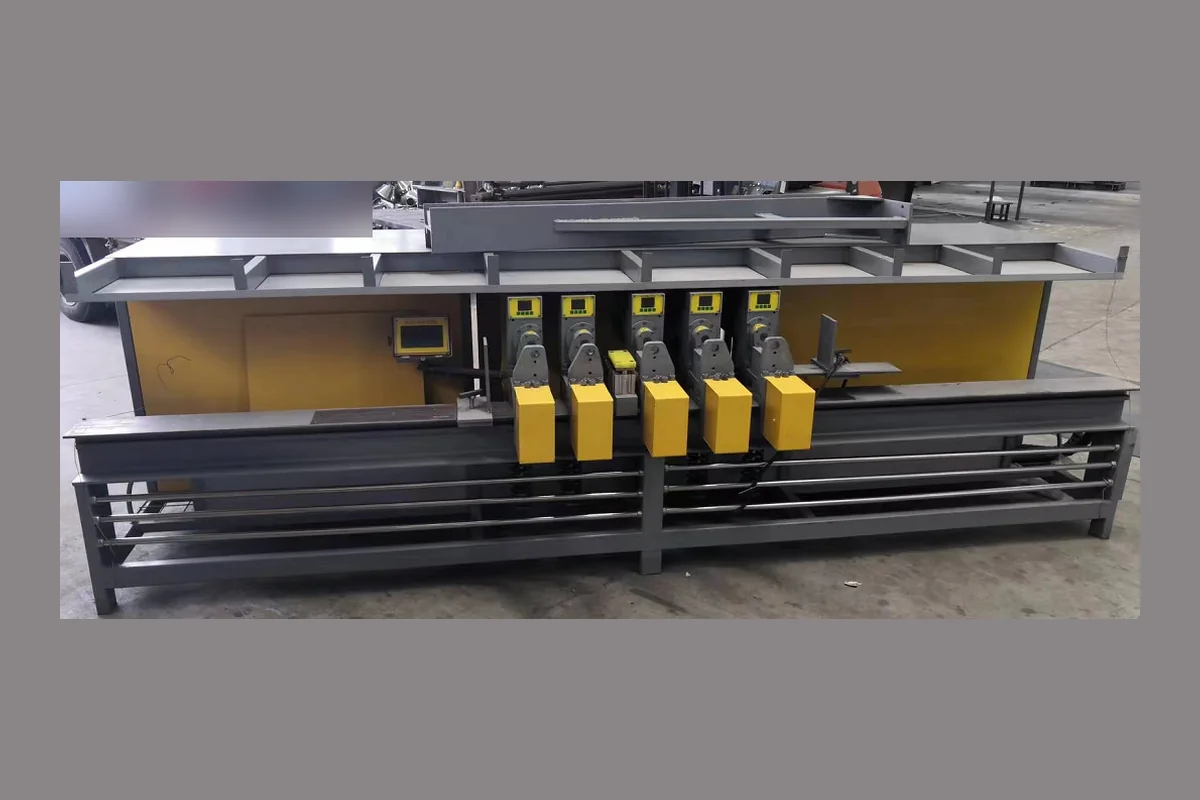
The GDQX-500 is a hydraulic rebar shearing production line. Rather than a single blade station, it integrates feeding, positioning and shearing into a continuous process. It is designed for volume — cutting hundreds of pieces per shift to fixed lengths — rather than for one-off cuts of oversized bar.
Shear Force: Why Tonnage Beats Model Numbers
The GQ70A develops 160 tons of shear force. That figure, not the 70 mm label, determines what the machine will cut reliably day after day. As a rule of thumb, required shear force rises with the square of bar diameter, so moving from 50 mm to 70 mm capacity is not a 40% increase in load — it is roughly double. This is why a machine rated at 50 mm cannot be "pushed" to cut 60 mm bar without risking blade chipping, flywheel damage, and motor overload.
Two practical checks before buying:
- Match tonnage to your hardest bar. If you cut mostly HRB500 or higher-grade steel, derate the published capacity by roughly 10–15% and size up.
- Check blade quality and clearance. A correctly gapped blade set on a 160-ton machine will outlast a poorly adjusted blade on a larger machine. Ask suppliers for blade material specs and recommended clearance settings.
Single Cutter vs Shear Line: The Real Decision
This is the choice that affects labor cost more than any specification.
When a single cutter (GQ50A / GQ70A) is correct
- Job sites with mixed, unpredictable cut lists — a few pieces of this, a few of that.
- Small to mid-size fabrication shops cutting under roughly 20–30 tons per shift.
- Remote sites where a simple, repairable machine matters more than automation. The GQ50A and GQ70A are mechanical/hydraulic workhorses with minimal electronics.
- Cutting bar above 50 mm, where the GDQX-500 line is not the intended tool.
When the GDQX-500 shear line pays for itself
- High-volume projects with repetitive cut lengths — precast plants, standard cage production, cut-and-bend schedules with hundreds of identical pieces.
- Operations where labor cost or labor availability is the constraint. A shear line replaces multiple manual cutting stations and reduces dependence on operator skill for length accuracy.
- Shops already running CNC benders such as the GJZD6-50CZ or GJZD6-65CZ. Feeding a shear line upstream of a CNC bending center keeps the whole cell running at a consistent rate.
A common mistake is buying a shear line for a job with a highly variable cut list. Setup and changeover time on a line only pays off when batch sizes are large. If your average batch is 10 pieces, stay with a single cutter.
Practical Selection Checklist
- Maximum bar diameter and grade: round vs ribbed, HRB400 vs HRB500.
- Pieces per shift and average batch size: under 30 tons with small batches → GQ50A or GQ70A; high volume with repetitive lengths → GDQX-500.
- Largest single bar: above 50 mm → GQ70A.
- Labor situation: tight labor market favors the automated line.
- Power supply and floor space: confirm before ordering; shear lines need more footprint and stable three-phase power.
- Certification: for Russia and EAC markets, confirm EAC certification is included in the quotation.
Matching Cutting to the Rest of the Line
Cutting rarely stands alone. If you also run stirrup production, a GW25 single-head CNC stirrup bender or a ZD-6M-25 five-head machine will consume cut bar at a predictable rate — size your cutter so it stays ahead. For straightening and cutting combined, the YGT4-15A with VFD handles 4–15 mm coil in one pass and is often a better fit than a shear line for coil-fed work. For thread rolling downstream, the HGS-40 (up to 40 mm) pairs naturally with GQ50A output.
Gongda, based in Hefei, Anhui, builds these machines on a factory rooted in the electromechanical works of Hefei University of Technology, and exports to Russia, Spain, Latin America, the Middle East, Southeast Asia and Africa. For a model recommendation based on your cut list, contact the export team on WhatsApp at +86 193 9277 7259 or email yuhua0095@gmail.com.
Send your requirement on WhatsApp — we reply within one business day.
WhatsApp Request a Quote →Products
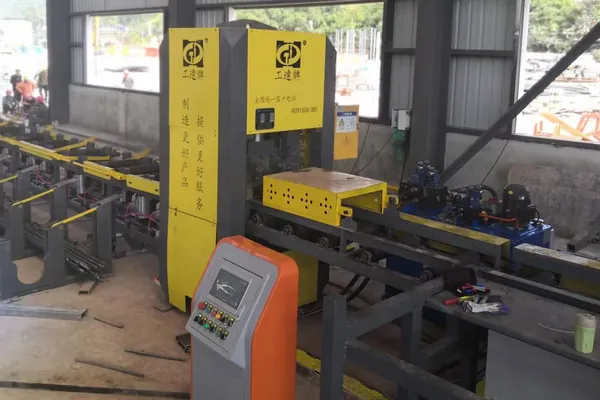
Hydraulic Rebar Shearing Production Line
High-capacity hydraulic rebar shearing production line for cutting ribbed and round bars in mass production.
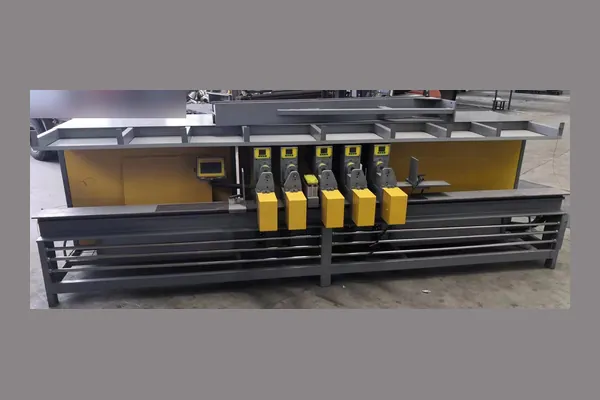
CNC Straightening-Cutting-Stirrup Line
Complete CNC straightening-cutting-stirrup production line combining VFD straightening, hydraulic cutting and five-head stirrup bending.
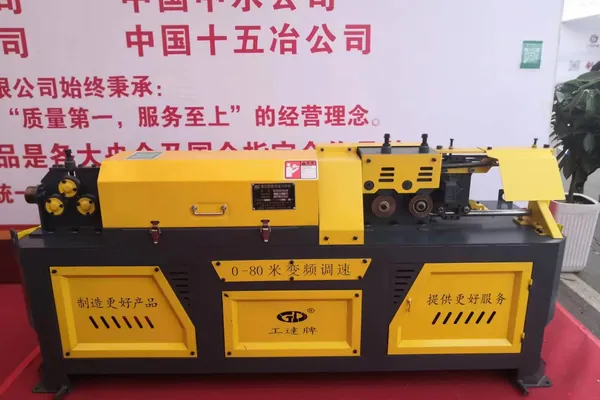
VFD Rebar Straightening & Cutting Machine
VFD-controlled rebar straightening and cutting machine for 4-15 mm bars with hydraulic cutting and ±5 mm accuracy.
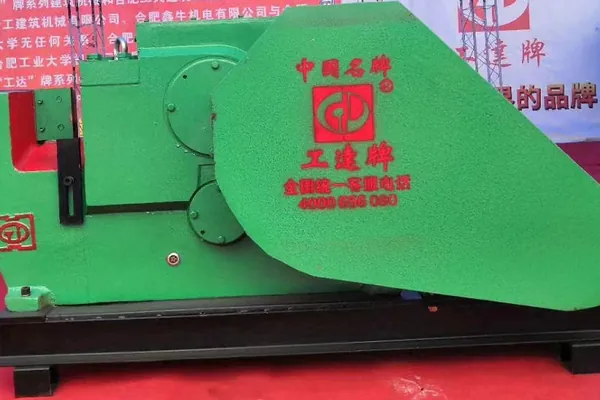
Rebar Cutting Machine
Powerful rebar cutting machine for bars up to 70 mm (A3 round steel) with 160-ton shear force.
Rebar Cutting Machine
Rebar cutting machine for 6-50 mm round and 6-36 mm ribbed bars, built for daily site and shop use.
Rebar Band Sawing Machine
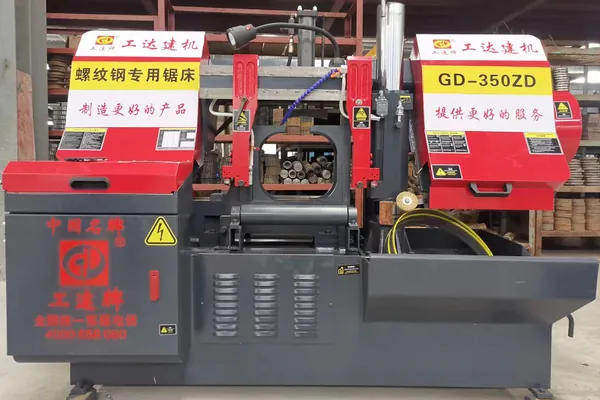
Rebar band sawing machine for threaded steel with a 400×350 mm cutting range.
More Articles
Single-Line vs Double-Line Rebar Machines: Which to Choose
Single-Line vs Double-Line Rebar Machines: Which to Choose If you are specifying a CNC rebar forming machine f…
Rebar Machine Electricity Requirements (380V, 50/60Hz)
Rebar Machine Electricity Requirements: 380V, 50/60Hz, and Generator Sizing for Remote Sites Most buyers sourc…
How to Calculate Rebar Processing Productivity
How to Calculate Rebar Processing Productivity: Bends Per Hour, Stirrups Per Shift, and Line Throughput Most b…
Rebar Machine Safety Operation Rules
Rebar Machine Safety Operation Rules: A Practical Guide for Buyers and Operators Rebar processing equipment is…
Rebar Machine Maintenance Checklist
Rebar Machine Maintenance Checklist: Daily, Weekly and Monthly Schedules That Prevent Downtime Every hour a CN…
CNC Stirrup Machine Cost and ROI Calculation
CNC Stirrup Machine Cost and ROI Calculation: What Buyers Should Actually Model When a fabrication shop or reb…
Ready to Talk Numbers?
Send us your rebar processing requirements and get a factory-direct quotation within one business day.