
Rebar Arc Bending Machine Guide for Tunnels and Slabs
Rebar Arc Bending Machine Guide for Tunnels and Slabs
Arc bending is one of the most underestimated operations on a rebar fabrication floor. Straight cutting and stirrup work get most of the attention, but tunnel linings, arched slab edges, dome reinforcement, and curved retaining walls all depend on accurate, repeatable radius bends. Get the radius wrong and the cage will not fit the formwork. Get the throughput wrong and the pour date slips. This guide covers what buyers should look for in a rebar arc bending machine, with specific reference to the Gongda GWH50CG, GWH50CZN, and SKDZWH-36 models and their working radius ranges.
What an Arc Bending Machine Actually Does
An arc bender, sometimes called a curved rebar bender or radius bending machine, forms continuous curves in rebar rather than discrete angles. The bar is fed between a driven bending roller and a fixed or adjustable counter-roller, and the radius is set by the relative position of those rollers plus the pass depth. This is fundamentally different from a CNC bending center, which produces fixed-angle shapes such as stirrups and hooks.
For tunnel work, arc benders produce the curved bars that follow the excavation profile. For slab and deck work, they produce edge reinforcement, curved balcony bars, and radial bars around openings. The key specification is not tonnage but minimum and maximum bending radius, because that determines whether the machine can match your structural drawing.
GWH50CG and GWH50CZN: 50mm Capacity Arc Benders
The GWH50CG and GWH50CZN are the workhorses of the Gongda arc bending range, rated for rebar up to 50mm diameter. Both are built for tunnel and heavy civil applications where large-diameter curved bars are standard.
- GWH50CG — standard configuration with mechanical radius adjustment, suited to fixed-radius production runs where the same curve is repeated across hundreds of bars.
- GWH50CZN — CNC variant with programmable radius and pass control, better suited to projects with multiple radii on one drawing set, such as a tunnel with varying lining thickness or a slab with several curved zones.
Practical radius range on these machines typically spans from a tight curve suitable for compact arch sections up to large sweeping radii for shallow tunnel crowns. When specifying, tell the supplier the finished inner radius required, not the outer radius, and confirm the bar diameter at that radius. A 50mm machine bending a 50mm bar to a very tight radius will require more passes and may need a larger minimum radius than the same machine bending 20mm bar.
Buyer checklist for 50mm arc benders
- Confirm minimum radius at maximum bar diameter, not just at small diameters.
- Ask whether the machine uses a single pass or multiple passes to reach the target radius — multi-pass is slower but produces less ovality and less residual stress.
- Check the roller hardness and whether rollers are interchangeable for different bar sizes.
- For the CZN variant, confirm the control system stores radius recipes and compensates for springback.
SKDZWH-36 and GDWHWQ-36: 36mm CNC Arc Benders
The SKDZWH-36 and GDWHWQ-36 are 36mm capacity CNC arc benders, positioned for mid-size tunnel work, metro projects, and architectural curved slabs. The lower capacity is not a drawback — it is a trade-off that usually brings faster cycle times, finer radius control, and better surface finish on smaller bars.
These machines are the right choice when your dominant bar size is 12–32mm and your radii vary across the project. CNC control allows the operator to enter a target radius and let the machine manage roller position and pass count, which reduces scrap on first-off bars. For slab edges and curved parapets, this repeatability matters more than raw capacity.
When to choose 36mm over 50mm
- Your heaviest curved bar is 32mm or below.
- You need tight radii that a 50mm machine cannot reach at that bar size.
- You produce many different radii per shift and want quick changeover.
- Surface finish and dimensional tolerance are specified tightly by the engineer.
Radius Range: What to Confirm Before You Buy
Radius capability is usually quoted as a range, but the range depends on bar diameter. A machine that bends 12mm bar to a 300mm radius may only reach a 900mm radius on 40mm bar. Always request a radius-versus-diameter table from the supplier rather than a single headline number.
Also clarify the measurement convention: inner radius, centerline radius, or outer radius. Structural drawings normally specify inner radius, while some machine catalogs quote centerline. A mismatch of one bar diameter can put your cage out of tolerance.
Integrating Arc Bending Into Your Line
Arc benders rarely work alone. Most fabrication shops pair them with a straightening and cutting machine such as the YGT4-15A (4–15mm, VFD-controlled) to prepare straight cut lengths, and a shear line such as the GDQX-500 for high-volume cutting. For projects that also need stirrups, the GW25 single-head CNC stirrup bender or the ZD-6M-25 five-head machine handles the closed shapes, freeing the arc bender for curved work only.
If your tunnel project also requires threaded couplers, the HGS-40 thread rolling machine covers bars up to 40mm, which aligns well with the 36mm and 50mm arc bender capacities.
Export and Certification Notes
Gongda equipment ships worldwide, with established deliveries to Russia, Spain, Latin America, the Middle East, Southeast Asia, and Africa. EAC certification is available for Russian and CIS markets, which is often a tender requirement on tunnel and metro packages. Confirm voltage, frequency, and control-language requirements at order stage, since CNC arc benders are configured per destination.
For radius tables, model selection, or a quotation on the GWH50CG, GWH50CZN, SKDZWH-36, or GDWHWQ-36, contact the factory directly:
- WhatsApp: +86 193 9277 7259
- Email: yuhua0095@gmail.com
- Site: chinarebarmachinery.com
Send your bar schedule with diameters and required inner radii, and request a radius-versus-diameter confirmation for each size. That single step prevents the most common arc bending specification error.
Send your requirement on WhatsApp — we reply within one business day.
WhatsApp Request a Quote →Products
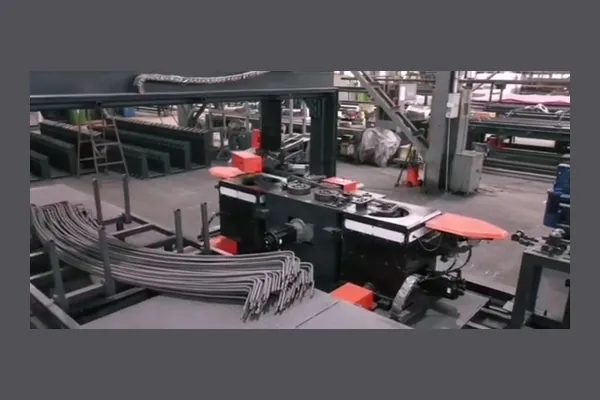
CNC Rebar Arc & Bend Machine
CNC rebar arc and bend machine that forms arcs, hooks and bends in one pass for precast and rebar processing plants.
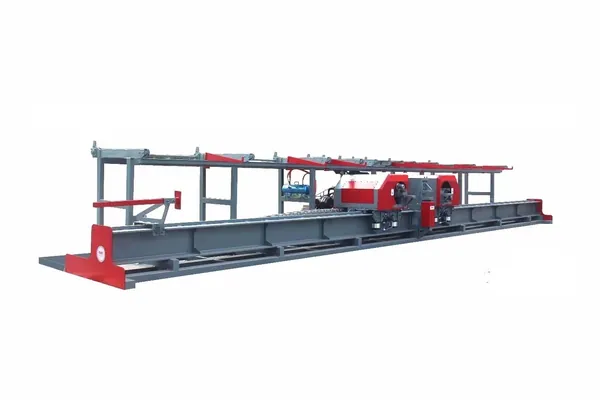
Vertical CNC Rebar Bending Center
Vertical CNC rebar bending center for high-precision bending of bars from 10 to 32 mm with automated positioning.
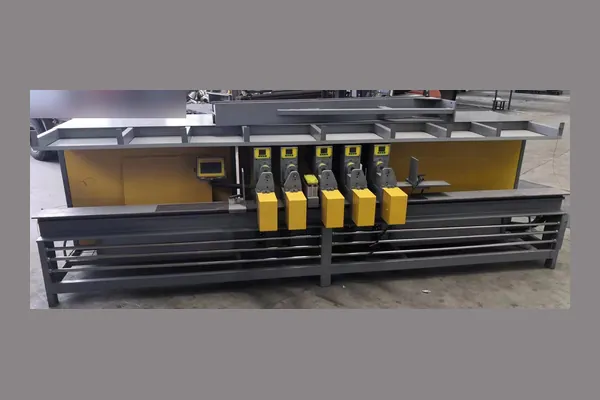
CNC Straightening-Cutting-Stirrup Line
Complete CNC straightening-cutting-stirrup production line combining VFD straightening, hydraulic cutting and five-head stirrup bending.
CNC Five-Head Stirrup Bending Machine
CNC five-head stirrup bending machine producing multiple stirrups per cycle with pneumatic automatic locking.
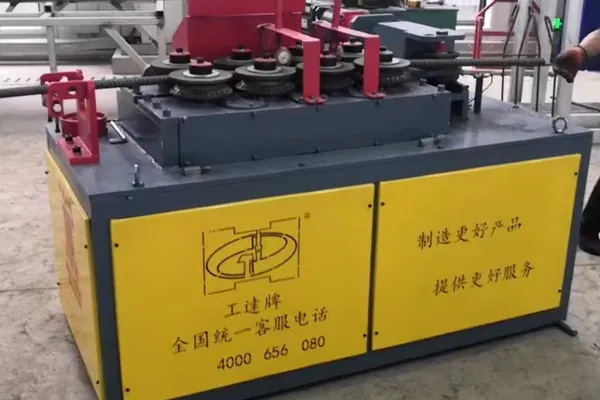
CNC Rebar Arc Bending Machine
CNC rebar arc bending machine handling bars up to 40 mm with servo control and touch-screen PLC programming.
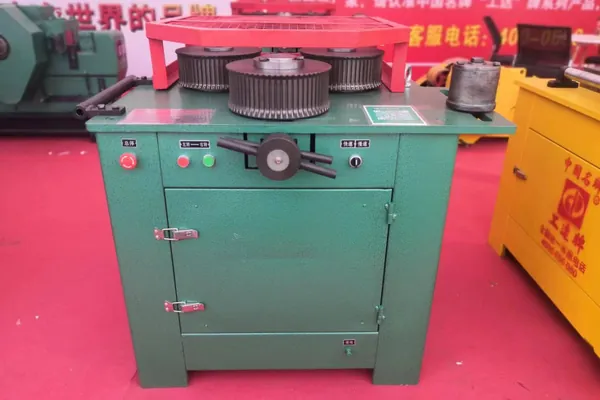
Rebar Arc Bending Machine
Heavy-duty rebar arc bending machine for bars up to 50 mm, ideal for large-radius arc bending on site.
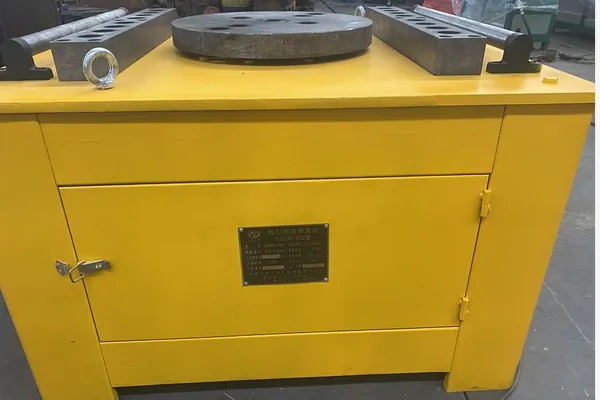
CNC Rebar Bending Machine
CNC rebar bending machine bending A3 steel up to 65 mm with a 550 mm working table.
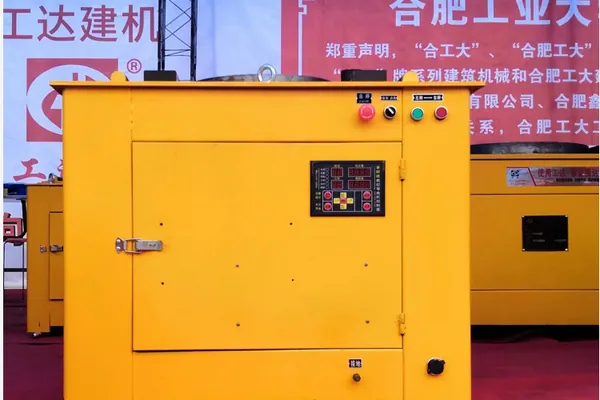
CNC Rebar Bending Machine
CNC rebar bending machine for bars up to 50 mm with a 420 mm working table.
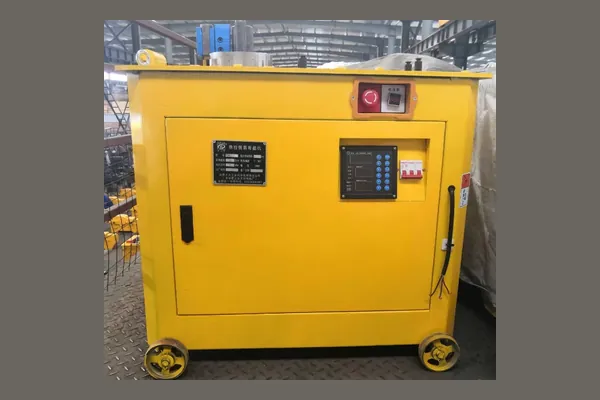
CNC Rebar Stirrup Bending Machine
CNC rebar stirrup bending machine for round steel up to 25 mm, quick and precise stirrup production.
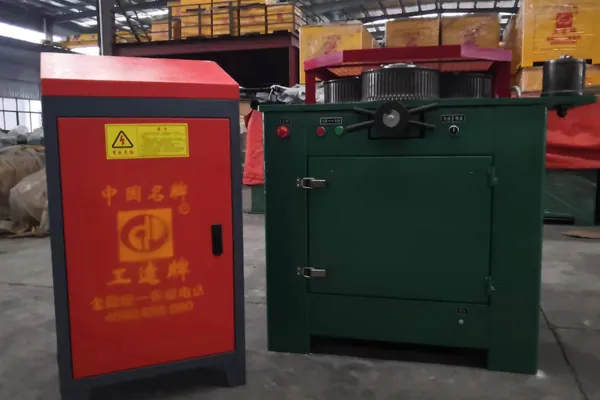
Rebar Arc Bending Machine (Upgraded)
Upgraded rebar arc bending machine for bars up to 50 mm with frequency-converted drive.
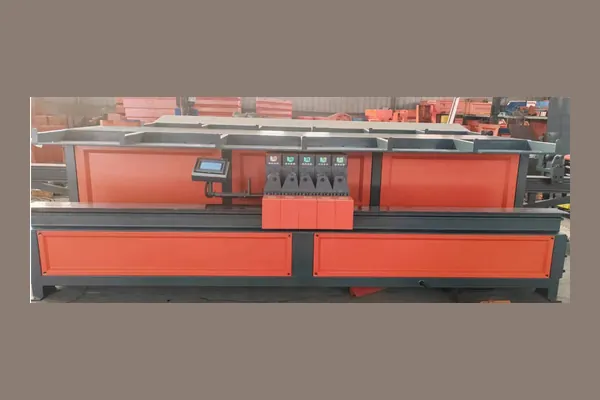
CNC Five-Head Stirrup Bending Machine
CNC five-head stirrup bending machine with hydraulic automatic locking and 8 kW installed power.
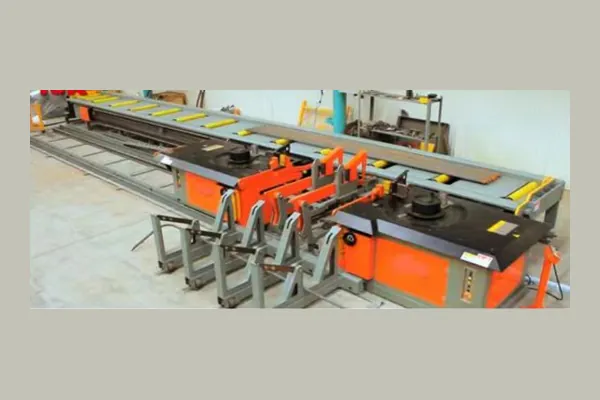
CNC Plane Rebar Bending Center
CNC plane rebar bending center for heavy production up to 50 tons per day, compliant with GB/T 232-2010.
More Articles
Single-Line vs Double-Line Rebar Machines: Which to Choose
Single-Line vs Double-Line Rebar Machines: Which to Choose If you are specifying a CNC rebar forming machine f…
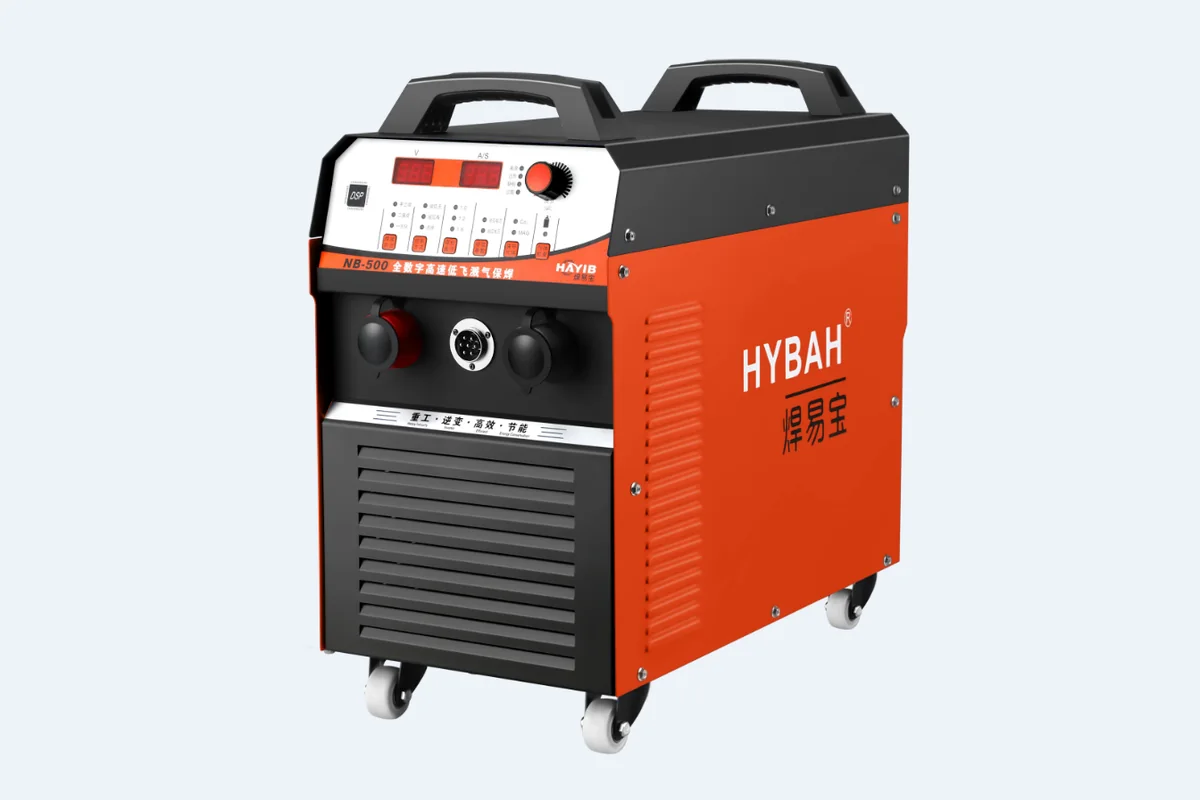
Rebar Machine Electricity Requirements (380V, 50/60Hz)
Rebar Machine Electricity Requirements: 380V, 50/60Hz, and Generator Sizing for Remote Sites Most buyers sourc…
How to Calculate Rebar Processing Productivity
How to Calculate Rebar Processing Productivity: Bends Per Hour, Stirrups Per Shift, and Line Throughput Most b…
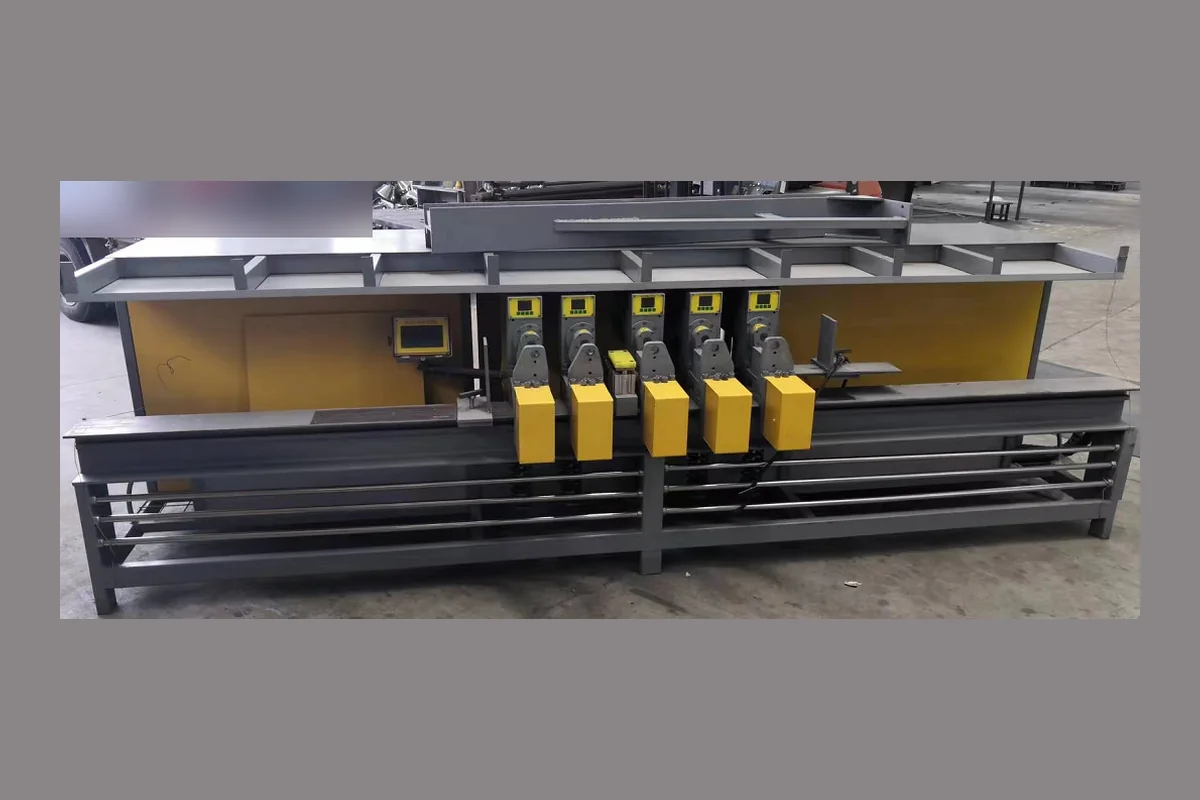
Rebar Machine Safety Operation Rules
Rebar Machine Safety Operation Rules: A Practical Guide for Buyers and Operators Rebar processing equipment is…
Rebar Machine Maintenance Checklist
Rebar Machine Maintenance Checklist: Daily, Weekly and Monthly Schedules That Prevent Downtime Every hour a CN…
CNC Stirrup Machine Cost and ROI Calculation
CNC Stirrup Machine Cost and ROI Calculation: What Buyers Should Actually Model When a fabrication shop or reb…
Ready to Talk Numbers?
Send us your rebar processing requirements and get a factory-direct quotation within one business day.